
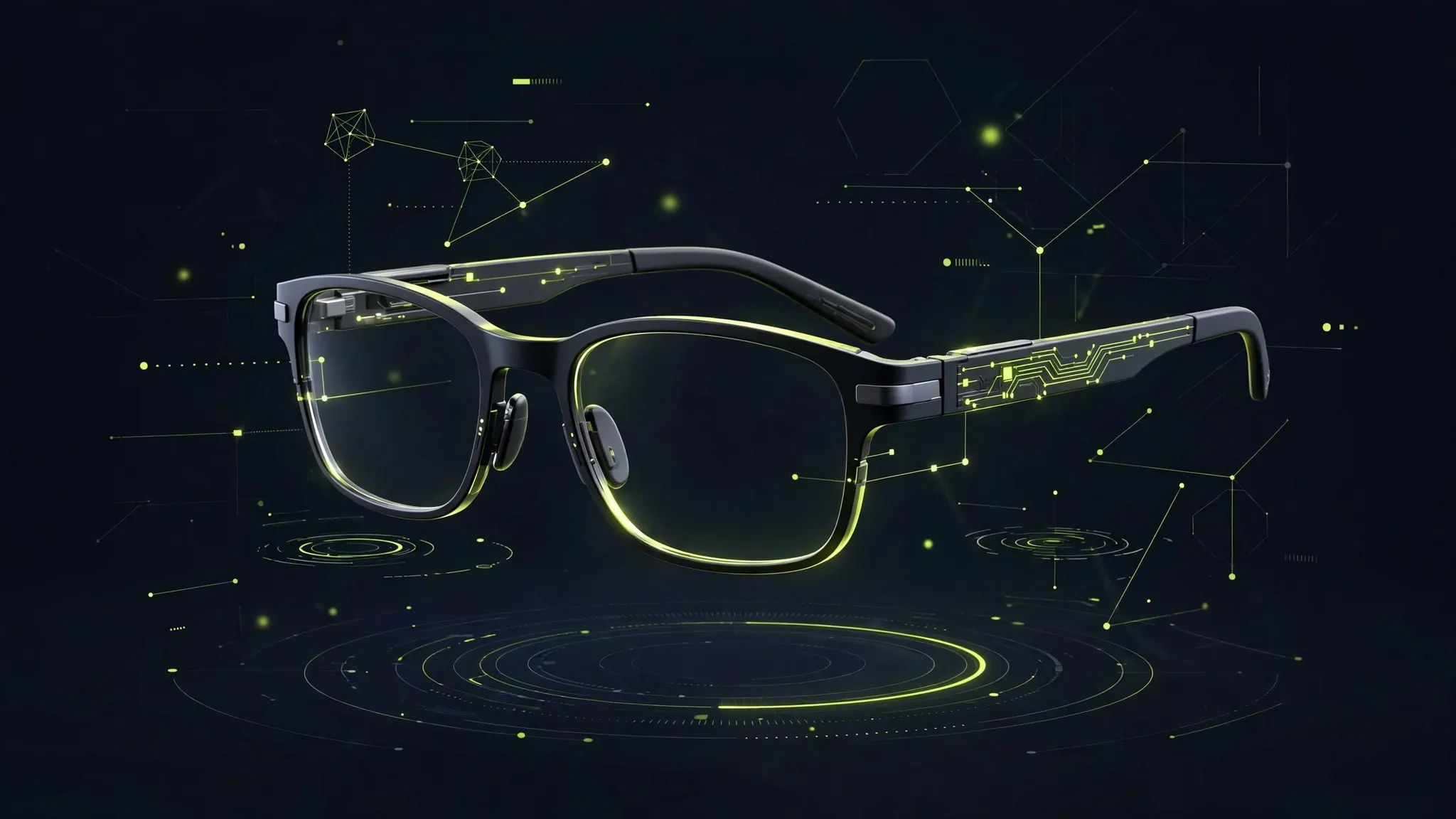
AI Wearables: Smart Glasses and the 2026 Trend
AI wearables have been "five years away" for a decade. In 2026, they are finally here in a form normal people might actually wear. I am Rashid Mahmood, Co-founder of Rust Innovation, and in my view the arrival of genuinely usable smart glasses changes the conversation for businesses too. Here is an honest look at what is real, what is hype, and what it means for you.
Why AI Wearables Took This Long
The honest answer is that AI wearables were waiting on three things, and all three arrived late. First, the AI itself had to get good enough to be useful in real time. A voice assistant that misunderstands you every third sentence is a toy. The current models handle messy, real-world speech well enough that talking to glasses in a noisy street actually works.
Second, battery and heat. Early smart glasses either died by lunch or cooked your temples. The new generation sips power because most of the heavy thinking happens in the cloud or on your phone, with the glasses acting as the interface. Third, and this took longest, someone had to make wearables that do not make you look like a cyborg. The current smart glasses look like, well, glasses. That matters more than any spec sheet. Nobody wears technology that embarrasses them, no matter how clever it is.
What AI Wearables Actually Do Well Right Now
The killer feature of today's AI wearables is hands-free, eyes-up assistance. Picture a technician repairing equipment while glasses pull up the manual, highlight the right diagram, and answer questions without a hand touching anything. Hands stay on the work. That is not a demo trick, it is a different way of working.
Translation is the other quiet miracle. Live translation through glasses is not perfect, but it can turn a painful, halting cross-language conversation into a merely slow one. For anyone doing business across languages, that alone is compelling.
Then there is the memory angle. Glasses that can remind you of a name, recall what you discussed with someone last month, or note where you left your keys: it sounds trivial until you live with it. Most of what these devices do well right now is removing small frictions. Small frictions, multiplied across a day, are a big deal.
The Limits of AI Wearables Nobody Puts in the Ad
Now the other side, because someone needs to say it. Battery life is still the ceiling. Heavy use gets you through a workday if you are lucky, and power users carry the charging case everywhere. The cameras raise real privacy questions too. Smart glasses with cameras make bystanders nervous in meetings and public spaces, and no amount of LED indicators fully fixes that.
The apps are also thinner than the hype suggests. Beyond the assistant, translation, and capture basics, the third-party ecosystem is still growing. And the price puts the good ones firmly in early-adopter territory. In my experience, they are at the stage smartphones were in around 2008: clearly the future, genuinely useful, but still rough and still expensive. If you buy in now, buy in with that expectation.
There is also the social learning curve. Talking to your glasses in public still gets looks. That will fade, like Bluetooth earpieces did, but we are in the awkward phase.
Trying AI Wearables Before You Commit
If you are tempted, do not start with a purchase. Start with a trial. A few retailers now run demo programs, and borrowing a pair from an early-adopter friend for a weekend teaches you more than any review. Wear them in your actual life: your commute, your meetings, your evening walk. Notice when you reach for them naturally and when they stay in the case.
Pay attention to the friction points that matter to you personally. Does the battery anxiety show up in your routine? Do the voice commands handle your accent in real noise? Does your workplace have a policy about cameras? A weekend of honest testing beats a month of forum research. Buy the pair that survived your real life, not the one with the best launch video.
What AI Wearables Mean for Businesses
Here is where it gets practical. If you run a business with field workers, technicians, warehouse staff, or salespeople, AI wearables deserve a pilot project this year. The use cases are concrete: hands-free manuals, remote expert guidance where a senior tech sees what the junior sees, instant translation for multilingual teams, and documentation that writes itself as people work.
For customer-facing businesses, the question is different: how do your customers feel about your staff wearing cameras? Get ahead of that conversation with a clear policy before someone else starts it for you on social media. And for marketers, wearables are a new surface: audio-first, glanceable, contextual. The brands experimenting now with glanceable content for smart glasses are learning lessons their competitors will pay for later.
My advice: do not buy a fleet. Buy three pairs, give them to your most curious employees, and ask them to keep a log for a month. The use cases that survive contact with real work are the ones worth scaling. AI wearables will reward the curious and punish the bandwagon buyers.