
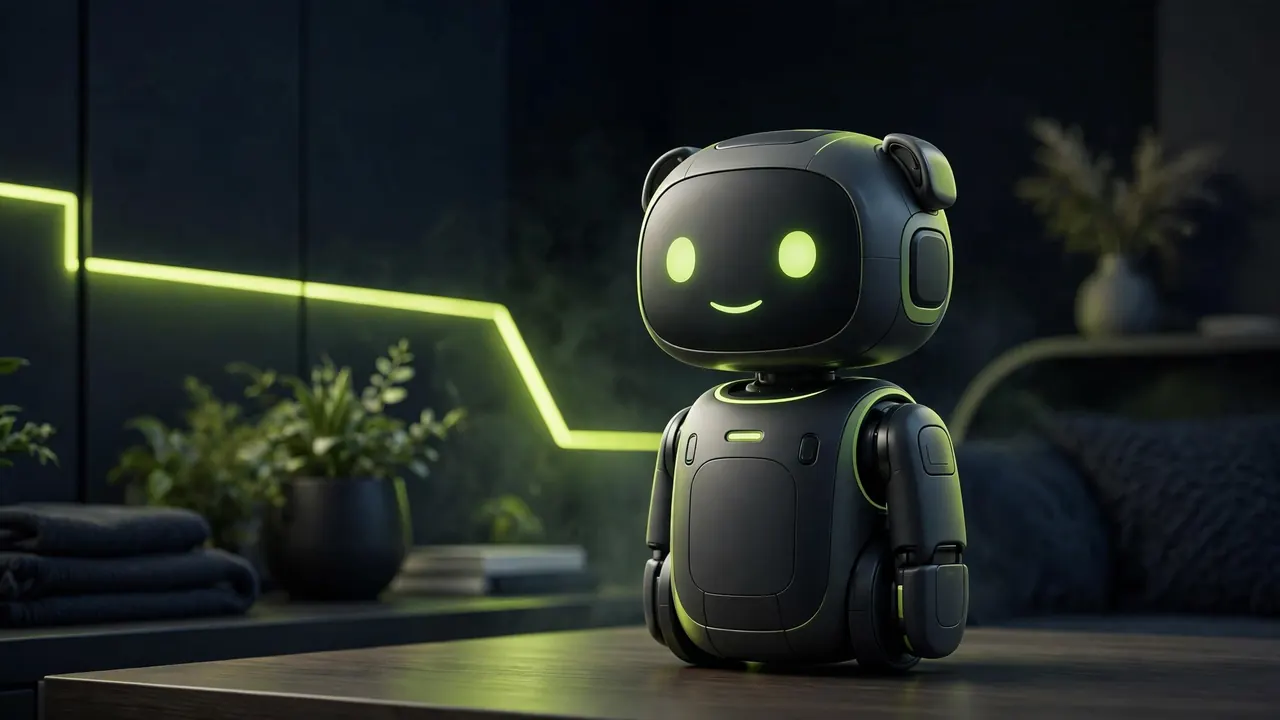
AI Robots: Companion Robots Are Having a Moment
AI Robots: Why Companion Machines Are Suddenly Everywhere
Rashid Mahmood, Co-founder of Rust Innovation
Consider a familiar scene: a small robot in a living room reminds an elderly man to take his medication, then sits with him while he drinks his chai and talks about cricket. He talks to it like a grandchild. For a long time, AI robots were a tech story. Moments like that are turning them into a human one.
Physical AI is having its moment, and companion robots are leading it. After decades of robots that were either industrial arms or clumsy toys, we are getting machines that move through homes, hold conversations, and provide genuine companionship. Let me lay out what is real, what is hype, and what it means.
Why Companion Robots Took Off
This did not happen by accident. Several threads braided together.
The language models got bodies. The breakthrough is not really in the motors, it is in the brains. Modern companion robots run conversational AI as their interface, which means they understand natural speech, remember context, and respond with something approaching personality. A robot that can chat naturally feels alive in a way that scripted responses never did. The hardware was ready years ago. The conversation was not.
The demographics are undeniable. Aging populations, more people living alone, stretched care systems. In country after country, there are more elderly people needing company and fewer humans available to provide it. Companion robots do not solve that problem, but they soften it. A robot that checks in daily, notices when routines change, and alerts family members is genuinely useful, not just cute.
And the price crossed a threshold. Early social robots cost as much as a car. Current companion robots cost as much as a good laptop. That is the difference between a research project and a product. When the price fits a household budget, adoption stops being theoretical.
What Companion Robots Actually Do
Let me describe what these machines do on a normal day, because the reality is more modest and more touching than the marketing.
They keep company. The core job is presence: a responsive, attentive entity in the home that talks, listens, and reacts. For elderly people living alone, that presence matters enormously. Loneliness is a health issue, and while a robot is not a person, it is measurably better than silence. Families check the robot's daily summaries the way they would check in on a parent, because in a sense, that is what it enables.
They handle routines. Medication reminders, appointment alerts, daily check-ins. The robot notices when grandma skips her morning walk three days running and flags it to the family. That pattern recognition, gentle and automatic, catches things that busy relatives miss.
They entertain and stimulate. Reading aloud, playing music, simple games, video calls with family initiated by voice. For people with limited mobility, the robot becomes a window: news, stories, connection to grandchildren. It might read the cricket scores every morning and get argued with about team selection, and that argument is worth more than any feature list.
They assist lightly: fetching small items, guiding to the kitchen at night, emergency alerts if someone falls.
The Honest Limitations
This is technology I find genuinely moving, but the limits need stating plainly.
They are companions, not caregivers. A robot cannot help someone off the floor safely, cannot administer care, cannot make medical judgments. Anyone selling a companion robot as a care replacement is lying. It is a supplement to human care, and families need to understand that line clearly.
The conversation has limits. The AI is good at friendly chat and routine topics. It struggles with deep emotional support, complex family dynamics, and anything requiring genuine wisdom. An elderly person in real distress needs a human. The robot should know when to call one, and the good ones do.
Privacy in the home is a serious question. A robot with cameras, microphones, and constant presence collects the most intimate data imaginable. Where does it go? Who can access it? I would not put one in a home without reading the data policy carefully and understanding exactly what is stored where. The convenience is real. So is the exposure.
And they are still fragile. Stairs, clutter, pets, power outages: the real home is an obstacle course. Current robots handle tidy apartments well and chaotic houses poorly. Set expectations accordingly.
Who Should Consider a Companion Robot
Practical guidance for real households.
Families with elderly parents living alone are the clearest fit. Not as a replacement for visits and calls, but as a daily layer of presence and monitoring between them. The medication reminders and routine-change alerts alone justify it for many families.
People with mild cognitive decline can benefit from the structure: reminders, orientation, familiar conversation. But this needs family involvement and, ideally, a doctor's awareness. Do not deploy medical-adjacent technology casually.
Single professionals working long hours are a quieter market. The robot greets you, manages the home basics, and keeps the place feeling less empty.
Who should not buy yet: anyone expecting a servant. These robots do not clean, do not cook, do not do laundry. The general-purpose home robot is still years away.
Where Companion Robots Go Next
Here is what I believe after watching this category mature. Companion robots are crossing from gadget to furniture, from novelty to normal. The technology will keep improving: better movement, longer battery, smarter conversation. But the core value is already here, and it is emotional, not technical.
The deeper shift is in what we accept. A generation ago, talking to a machine was science fiction. Then it was a phone assistant. Now it is a presence in the living room. Each step felt strange until it felt normal. Companion robots are on that same path.
My advice: judge this technology not by the specs, but by the quiet Tuesday afternoon when someone who would have been alone was not. By that measure, companion robots are already succeeding, and the best is still coming.